10:00–12:00
1大濠公園 (Ohori Park) Nature
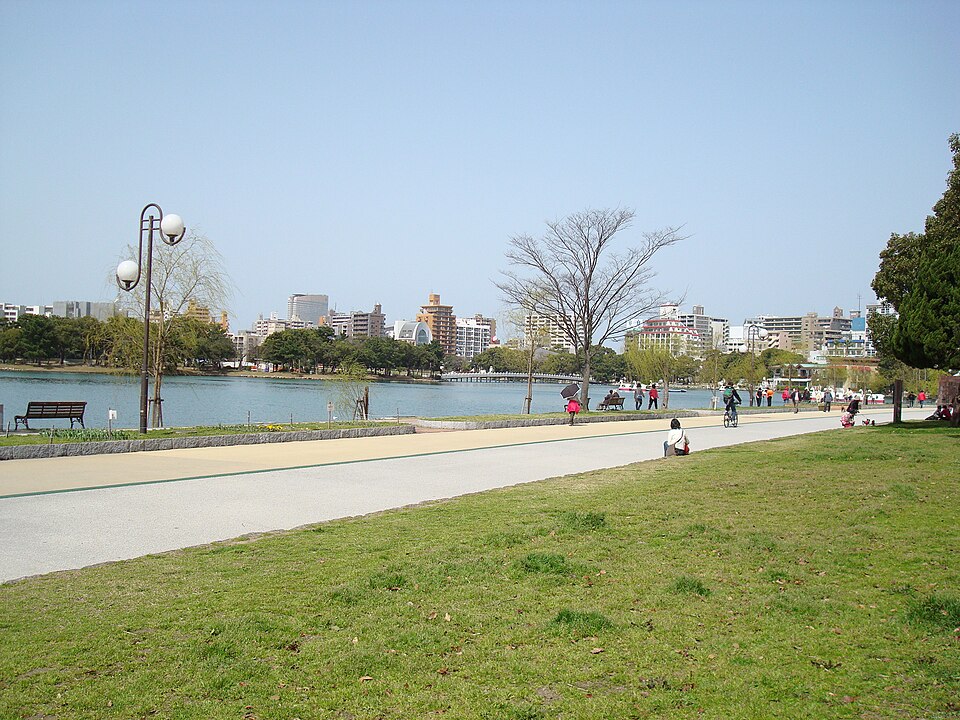
Flat 2km lakeside loop modeled on Hangzhou's West Lake, perfect stroller circuit with boats to watch.
Fukuoka might be Japan's easiest big city with a 2 year old: it is compact, the subway has elevators at every station, and the best things here are parks, markets and noodles rather than queues. Robin planned each day around one anchor zone (Ohori Park, Dazaifu, the huge Uminonakamichi seaside park, then the market) with the nap in the middle and dinner seated by 18:00, which in Japan is a completely normal hour to eat.
 Planned by Robin
4 days · 18 stops
Planned by Robin
4 days · 18 stops
Flat 2km lakeside loop modeled on Hangzhou's West Lake, perfect stroller circuit with boats to watch.
Fukuoka's own tonkotsu style at the flagship of the brand born here, booth seating works fine with a stroller parked alongside.
The quiet tree-lined path along the park's south shore is flat and shaded, time it for the toddler's nap.
A proper run-around spot with slides and climbing frames right by the lake, the toddler-first stop for the day.
A relaxed grill counter with private-feeling low tables, welcoming to families and heavy on local seafood and vegetables.
Kyushu's great Shinto shrine to the god of scholarship, its approach lined with plum trees just past peak bloom in early April.
Try umegae-mochi, the shrine town's grilled plum-blossom cakes, at the well-known stall right by the approach.
The 20-minute Nishitetsu train ride back is usually enough to send a toddler off, settle in for the rest of the nap at the hotel.
An open lawn near the shrine grounds where toddlers can toddle freely after the sit-down shrine visit.
A cozy, kid-tolerant motsunabe (offal hotpot) spot serving Fukuoka's beloved local specialty in individual pots.
Wide flower fields (nemophila starts blooming in April) framed by the bay, the headline sight for the parents today.
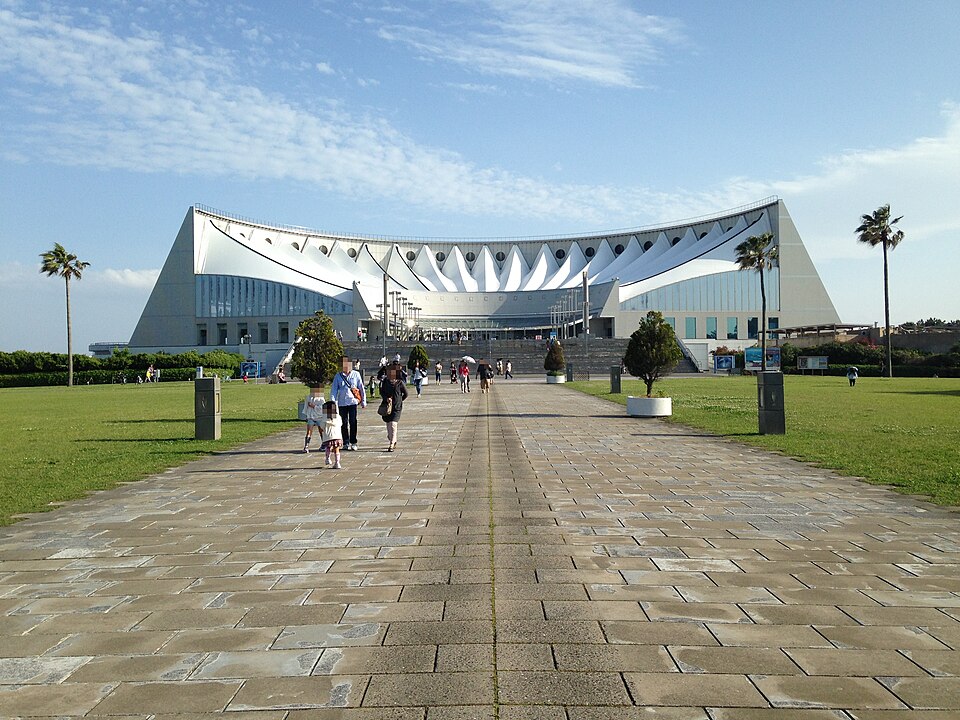
Grab bento-style lunch from the on-site food hall and eat on the lawn near the flower fields.
A long flat path through pine woods to the play zone, good nap-timing walk if the toddler dozes en route.
One of Kyushu's best toddler play zones, with water play and soft-surface climbing structures, the day's toddler-first stop.
A family-friendly hotpot house near the bay side, easy with a stroller and used to small kids.
Fukuoka's old-school covered market, dubbed the city's kitchen, small enough for a relaxed stroller wander before packing up.
A no-frills counter inside the market serving fresh sashimi don, a genuine taste of local Fukuoka before you head to the airport.
A short, unhurried return to the park's water's edge near the start, the calm bookend to close the trip.
Fukuoka invented the milky pork-bone bowl. Plain noodles fished out early make a perfectly good toddler lunch while you eat the real thing.
The local hotpot, rich broth and cabbage sweetness. Order rice and the mild vegetables for the little one and keep the bubbling pot on the far side of the table.
Spicy cod roe is Fukuoka's signature souvenir flavor. Too spicy for a toddler, ideal on morning rice for parents.
April is peak season for Fukuoka's famous oversized strawberries, the rare local specialty a 2 year old will fight you for. Any market or depachika basement food hall will have them.
No, and legally they do not need one: Japan's under-6 child seat law has a real exemption for taxis, so a toddler on a lap in the back is legal and is what local families do for short hops. The GO taxi app has no child seat option either. Robin planned this trip so you barely need cars at all: the subway has elevators at every station, and the two excursions run on trains.
Family restaurants and mall food courts almost always do, and Saizeriya's belted baby chairs are the most toddler-proof in Japan. Small independent shops often have none, but many offer zashiki floor seating instead, low tables on tatami where a wobbly 2 year old simply cannot fall off a chair. Asking for zashiki is a genuine toddler hack.
Honestly, mostly no with a 2 year old: cramped bench counters, open flames and nowhere to park a stroller. If you want the experience, go at 17:30 when stalls open and are roomiest, one parent on toddler duty. The comfortable version is Telas at Hakata Riverain, eleven yatai-style stalls indoors with high chairs, changing tables and toilets.
Easily. Japan eats early, and an 18:00 dinner is standard rather than a tourist compromise. Every dinner on this plan is seated by 18:00 at places that serve straight through.
Mild and kind: highs around 21 degrees, cool evenings around 12, and the tail end of cherry blossom season if your dates land well. A light jacket for mornings, a stroller rain cover for the odd shower, and no heat management needed.
Yes, genuinely. Every Fukuoka subway station has elevators, the airport is 6 minutes from Hakata by subway, and distances in this compact city stay short. This is one of the easiest Japanese cities to push a stroller through.
This plan is genuinely built around a 2 year old rather than adapted for one. Every day has exactly one headline anchor plus one toddler-first stop, the nap happens mid-day as a stroller loop or a rocking train ride, and every dinner is seated by 18:00, which in Japan is when locals eat anyway. Day 3 is a single giant park on purpose: one pin on the map, zero transitions, and the best playground of the trip. Strollers work everywhere on this route thanks to station elevators and flat park paths.
Japan requires a child seat under age 6 in private cars, but taxis are genuinely exempt, and no Fukuoka taxi carries a car seat. Local families take short taxi hops with the toddler on a lap. This plan needs almost no cars: subway and trains do the work, which is both the legal and the safest answer.
At family restaurants, food halls and department store restaurant floors, yes, reliably. At small local shops, often no high chair but frequently zashiki floor seating, which works even better with a wobbly toddler. A fold-flat fabric booster in the day bag covers every gap.
Warmly and calmly. Children are adored in Japan, staff will bring a small bowl and cutlery without being asked, and early dinners mean you usually have the room half to yourselves. The one cultural note: public spaces value quiet, so the parks and food halls are where a toddler can be at full volume guilt-free.
Fukuoka is the easiest stroller city of Japan's big five. Ohori Park's lakeside loop is flat and famous for a reason, with two playgrounds scaled to different ages. Every subway station has an elevator. The one carrier moment is Dazaifu's shrine gravel, and even that is short.
About as good as travel weather gets: 21 degree afternoons, 12 degree evenings, low rain, and possibly cherry blossoms. No sunscreen emergencies, no frozen fingers, just a light jacket and a stroller rain cover.
With delight, quietly expressed. Expect soft waves from grandmothers, spontaneous small gifts at markets, and staff who produce a toddler cup unprompted. A foreign 2 year old saying arigatou will stop a market stall in its tracks.
Momochi Seaside Park is 15 minutes from downtown. April is sand-castle weather rather than swimming weather, and the wide promenade is an easy stroller loop.
Give Marine World, the aquarium next to the big park, its own slow morning instead of squeezing it into the park day.
Keep Ohori Park, the big seaside park day and the market goodbye. Dazaifu is lovely but it is the one day that depends on a train timetable.
This trip was built for a typical first visit. You aren't typical. Find your loves, your budget, and your perfect Fukuoka adventure by building on this trip with Hey Robin.
Finish this itinerary FREE at Hey Robin →.jpg)

